
How Small Business Websites Can Simplify Backlink Monitoring for Better SEO
Updated: Sep 9
Cozy Book Pals is a reading community that publishes book recommendations across genres, from new releases and bestsellers to romance tropes such as enemies-to-lovers, small-town romance, romantasy, and cozy romance. The public site is a web of list pages, genre hubs, and a Cozy Book Blog, plus outbound links that send readers to books available through the Amazon Associates program. That mix is useful for readers and unusually messy for link monitoring.
A bookstore-style directory does not need a corporate backlink program. It needs a calm way to see whether Amazon destinations still resolve, whether internal genre URLs still connect to live lists, and whether any outside mention still points at a current page rather than a retired slug. A backlink monitoring tool is useful here when it shows new links, lost links, and destination URLs in one place so the work stays reviewable.
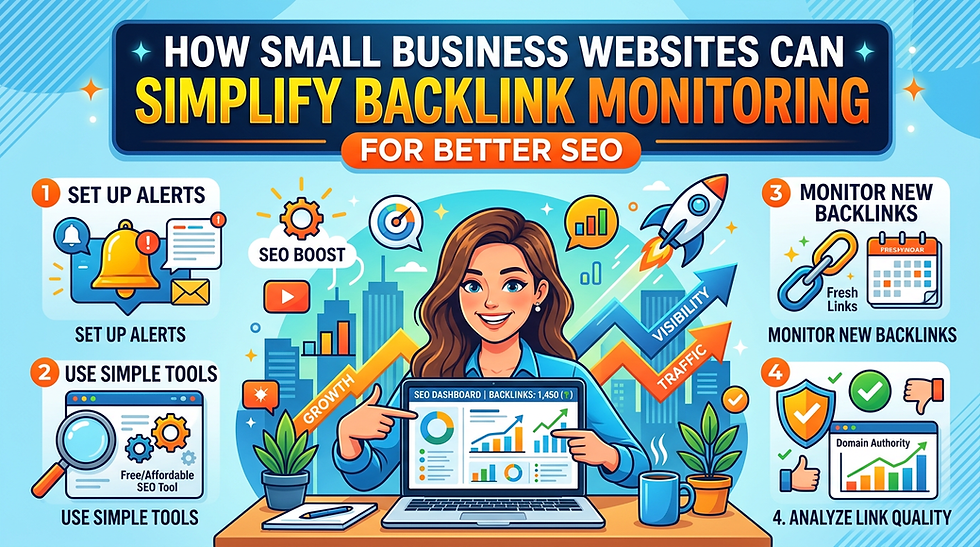
Why a recommendation site accumulates links so quickly
Cozy Book Pals updates reading lists on a regular cadence. New-books and bestseller pages say the lists are refreshed monthly; romance-trope pages say they are updated weekly. Each refresh can add or move internal paths, change which titles sit under a “Book Club Top Pick” note, and alter Amazon destinations when a listing is replaced.
That creates three families of links that should not be judged the same way:
Internal links among genre hubs, tropes, new-books, bestsellers, and the blog.
Outbound Amazon links that exist because the site discloses an Associates relationship and points readers to book pages.
Possible inbound mentions from other reading blogs, newsletters, or social posts. Those mentions are worth recording when they appear. They are not evidence of a partnership unless the public site says so, and Cozy Book Pals does not publish a partnership directory.
Author names on a list page are bibliographic. They describe the books being recommended. They are not confirmed publisher deals, affiliate-beyond-Amazon arrangements, or traffic results.
What monitoring should actually simplify
The useful questions for this site are practical:
Did a new referring domain mention Cozy Book Pals, a genre hub, or a specific list URL?
Did a previously recorded mention disappear or start pointing at a 404?
Do Amazon book links still reach live listings, or did a product URL change after a list refresh?
Do internal paths from the homepage into romance tropes, historical fiction, science fiction, or autobiography still resolve?
Are any inbound links sitting on pages that have nothing to do with books or reading?
A monitoring view that answers those questions is more useful than a raw link-count chart. Vanity totals hide the only failures that matter on a recommendation site: a dead Amazon destination, a broken genre hub, or a mention that now lands on the wrong URL.
A workflow that fits list pages and the blog
Most small editorial teams do not need a daily crawl. They need a light habit that matches how Cozy Book Pals actually publishes.
After each monthly new-books or bestseller refresh, sample the Amazon destinations on that page and note any that fail.
After weekly romance-trope updates, spot-check the hub itself and a few child trope URLs, including pages such as cozy romance, fake dating, or friends-to-lovers if those lists were edited.
Once a month, review new and lost inbound links. If a book blog cited an old slug, redirect that slug to the current list or blog URL that still matches the mention.
Keep outbound Associates links in their own bucket. A broken Amazon URL is a reader-trust problem, not a “lost backlink.”
Ignore unrelated comment spam and random directories that never sent a reader toward a book list.
The Cozy Book Blog is a second surface. If a blog post cites a genre hub or a specific title page, those internal links belong in the same monthly pass. A delightful reading note that points at a removed URL is still a broken path.
Mentions, authors, and what not to invent
It is reasonable to watch for mentions of Cozy Book Pals, the blog, or a named list. It is not reasonable to invent relationships with publishers, festivals, or authors because their names appear on a recommendation card. The site’s own public facts are enough: it is a warm reading community, it organizes books by genre and trope, it discloses Amazon Associates links, and it invites readers to save the lists because they change.
If an outside page links to a Book Club Top Pick write-up, the destination should still be that write-up or the parent list. Redirecting a book-specific mention to the homepage wastes the context the other writer actually cited.
Where a wider audit still helps
Backlink monitoring does not replace on-page care. If a strong mention sends someone to a genre page with a vague title, a missing description, or a cluster of dead Amazon buttons, the mention is doing less than it could. An SEO audit tool can sit beside the link review when you need to see empty metadata, heading gaps, or broken internals on the same hubs you are already checking.
That pairing stays small. The audit is for the pages that earn mentions or that carry the Associates links. It is not a reason to rebuild every trope URL in one sitting.
Priority | Why it matters on Cozy Book Pals
Live Amazon destinations | Readers use them to find the recommended book. |
Internal genre and trope URLs | They are the site’s actual information architecture. |
Mentions that still resolve | They preserve whatever citation already exists. |
Irrelevant or spam links | They add noise and should not drive the workflow. |
The homepage already tells readers they are never reading alone, and the genre index is the actual product: historical fiction, action and adventure, science fiction, autobiography, and a long romance-trope tree. If a mention from another bookish site pointed at “romance book tropes” last year, the current tropes hub should still be the redirect target. Sending that visitor to a random new-books list because it happens to be live is the same mistake as redirecting a tax-resolution URL to a generic blog index.
A recommendation site stays healthier when link review is treated as maintenance of real reading paths. Watch the lists you actually publish, the Amazon destinations you actually disclose, and the mentions you can verify. That is simpler, and more honest, than chasing a larger backlink number that does not describe how Cozy Book Pals works.



Comments